
You saw “IDC” in a text and now you’re stuck wondering what your friend actually meant. Were they annoyed? Bored? Just being lazy with their typing? IDC stands for I don’t care, and it’s one of the most used pieces of chat abbreviations floating around today.
But here’s the twist. The same three letters can sound chill in one message and cold in another. This guide breaks down every angle so you never have to guess again.
What Does IDC Mean in Text & Chat?
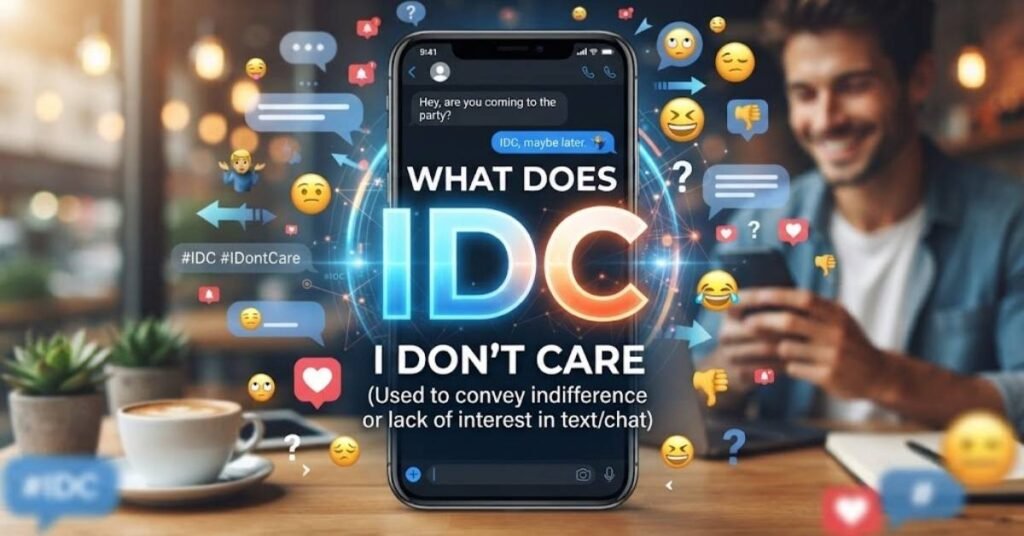
IDC is short for I don’t care, plain and simple. People drop it into text messaging when they genuinely have no preference, or when they want to shut a topic down fast. It’s become part of everyday chat language across messaging apps, group threads, and comment sections.
Think of it like a shrug you type instead of act out. You can’t physically shrug in a text, so IDC fills that gap. It’s quick, it saves keystrokes, and honestly, most people type it without thinking twice.
Simple Meaning of IDC
At its core, IDC means it doesn’t matter to me. That’s it. No hidden code, no secret meaning buried underneath. It’s used when someone wants to hand a decision over to you, or when a topic just isn’t worth their energy anymore.
Quick Chat Examples
- “Pizza or burgers tonight?” “IDC, you pick.”
- “She said something rude about me.” “IDC honestly, not worth my time.”
- “Which movie should we watch?” “IDC, whatever works.”
Why People Use IDC
Typing speed matters in casual texting. Small keyboards, character limits, and fast back and forth conversations push people toward shortcuts. IDC also lets someone express emotional distance without writing a whole paragraph explaining why they’re over something.
Polite Ways to Say IDC in a Conversation
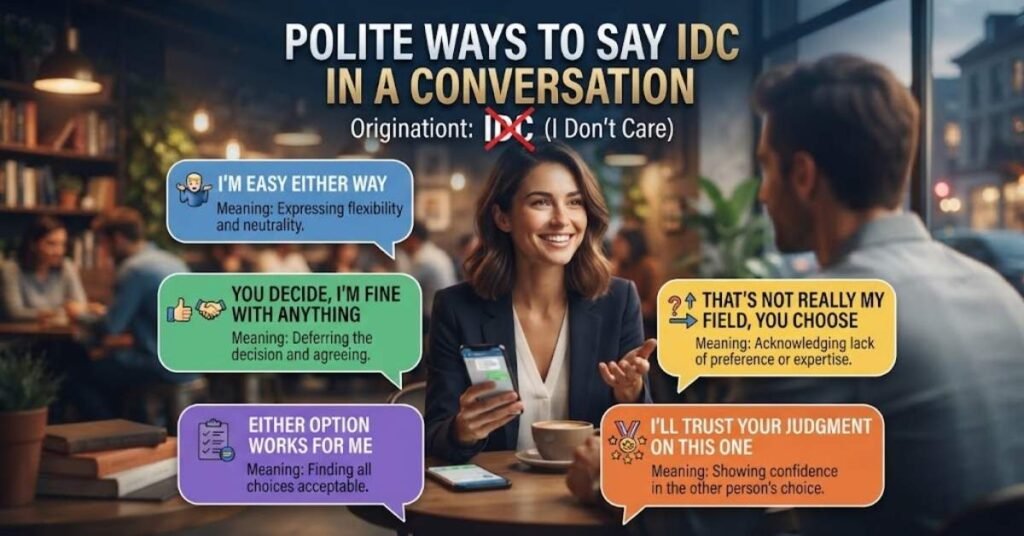
Sometimes “IDC” lands wrong, especially with people who don’t know you well. If you want the same meaning without sounding dismissive, swap it for softer phrasing.
Try “whatever works for me” or “I’m honestly fine with either option.” These carry the same no preference energy but feel warmer. A coworker or teacher is far less likely to read these as rude compared to a blunt IDC dropped mid conversation.
Context still matters here. With close friends, IDC reads as normal casual conversations shorthand. With someone new, a slightly longer reply protects the tone and avoids awkward silence afterward.
How to Know What Someone Really Means by IDC
Reading IDC correctly comes down to tone interpretation. The words on screen never change, but the feeling behind them shifts constantly depending on what came before.
Check the punctuation first. “IDC” with a period can feel flat or annoyed. “idc lol” feels light and joking. A string of lowercase letters with no punctuation at all usually signals a relaxed, low stakes reply rather than anything serious.
Look at the conversation history too. If your friend just vented about a rough day and typed IDC afterward, that’s likely emotional exhaustion, not rudeness. Context clues almost always beat the literal words.
Full Form, Stands For & Short Meaning of IDC
The full form of IDC is straightforward: I Don’t Care. It’s classified as an acronym, though some linguists call it an initialism since you say each letter rather than pronouncing it as a word.
Breakdown of IDC
- I = the speaker
- D = Don’t
- C = Care
Three letters, one clear phrase, endless possible tones.
Short Meaning
IDC simply signals lack of concern or lack of interest about a specific topic. It’s a fast way to communicate flexibility or disengagement, depending on the situation.
Different Tones of IDC
Casual Tone
Used between friends deciding on plans. Light, breezy, no drama attached.
Annoyed Tone
Used when someone’s fed up with a topic or an argument that’s dragging on too long.
Funny Tone
Used as a joke, often paired with emojis or GIFs to soften the message and add humor.
Is IDC Rude?
Not automatically. IDC becomes rude only when the context calls for care and someone responds with dismissiveness anyway. Used in low stakes chats about dinner or movies, it’s completely harmless.
Origin, History & First Known Use of IDC
Internet abbreviations like IDC didn’t appear overnight. They grew out of necessity during the early days of digital communication, when speed and simplicity mattered more than full sentences.
Why IDC Became Popular
Back when SMS texting charged by the character, shortcuts like IDC, LOL, and BRB saved money and time. People needed fast ways to express common phrases without typing them out in full every single time.
Early Online Use
AOL Messenger and Yahoo Messenger chatrooms in the late 90s and early 2000s were breeding grounds for this kind of shorthand. Teenagers chatting for hours needed quick replies, and abbreviations became second nature.
Social Media Growth
As platforms like Facebook and Twitter (now X) took over, IDC moved from private chats into public comments and posts. It became part of everyday online slang, recognized across nearly every demographic.
Modern Internet Culture
Today, IDC sits comfortably inside meme culture and viral trends. It shows up in captions, comments, and even audio clips on platforms built around short form video.
How People Use IDC in Daily Conversations
Daily conversations are full of small decisions, and IDC often steps in to skip the back and forth. It’s less about being lazy and more about keeping things moving.
Common Ways People Use IDC
1. Showing No Preference
Deciding between options where either choice genuinely works fine.
2. Ignoring Opinions
Brushing off someone else’s take on a topic that doesn’t matter much to you.
3. Ending Arguments
Closing a disagreement before it escalates further into something bigger.
4. Casual Humor
Joking around with friends, often exaggerated for comedic effect.
Why Tone Matters
The same message can comfort one person and offend another. Conversation tone shapes everything, which is why context always outweighs the literal definition.
Best Times to Use IDC
Use it for low stakes choices like food, movies, or weekend plans. Avoid it during serious talks about feelings, money, or anything that clearly needs real attention.
Quick Examples
“Left or right route?” “IDC, both get us there.” Simple, harmless, done.
IDC Meaning Across WhatsApp, Instagram, TikTok & Snapchat
Every platform gives IDC a slightly different flavor based on how people actually communicate there.
IDC on WhatsApp
Mostly used in group chats and private messages between friends and family. It’s casual and rarely misread since context builds up over long running threads.
IDC on Instagram
Common in Instagram captions, comments, and DMs. Often paired with emojis to keep the tone playful rather than harsh.
IDC on TikTok
Shows up heavily in TikTok comments and trending audio. Sometimes it’s genuine, other times it’s part of a joke format the whole comment section is playing along with.
IDC on Snapchat
Frequently tied to Snapchat streaks and quick replies. Someone might type IDC just to keep a streak alive without much thought behind the message.
Platform Differences
Shorter platforms lean toward humor and speed. Messaging apps built for longer conversations tend to carry more emotional weight behind the same three letters.
Different Meanings of IDC in Other Fields
Outside of chat, IDC carries entirely different definitions depending on the industry.
IDC in Business
International Data Corporation is a major market research company covering technology trends and forecasts worldwide.
IDC in Technology
Internet Data Center refers to physical facilities that store and manage servers, data, and networking equipment for companies.
IDC in Medical Use
Invasive Ductal Carcinoma is a specific type of breast cancer diagnosis, one of the most serious alternate meanings tied to this acronym.
Why Context Matters
Reading IDC in a business report versus a text message calls for completely different interpretations. Never assume meaning without checking the surrounding conversation.
Important Tip
If you’re ever unsure which meaning applies, look at who sent the message and where. A doctor’s note and a friend’s text are worlds apart.
Common Confusions, Mistakes & Wrong Interpretations
Misreading IDC happens more often than people admit, especially across generations or unfamiliar group chats.
Common Mistakes
Thinking IDC Always Means Rude
This is the biggest misunderstanding. Plenty of IDC messages are neutral or even friendly, not hostile at all.
Using IDC in Serious Situations
Dropping IDC during an emotional conversation about someone’s wellbeing can come across as cold, even if that wasn’t the intention.
Confusing IDC With IDK
IDK means “I don’t know,” which is completely different from not caring. Mixing these up changes the entire meaning of a reply.
Overusing IDC
Repeating it constantly can make someone seem checked out of every conversation, which isn’t always the impression people want to give.
Wrong Tone Interpretation
Text lacks facial expressions and body language, so tone gets lost easily. What felt like a joke to the sender can feel cold to the reader.
Better Alternatives Sometimes
When the topic actually matters, swapping IDC for a genuine response avoids unnecessary friction down the line.
Similar Terms, Alternatives & Related Slang
IDC belongs to a bigger family of internet slang that shapes how people chat today.
Similar Slang Terms
IDK, TBH, IMO, NVM, and SMH all serve different purposes but share that same fast, shorthand style.
Softer Alternatives to IDC
“Up to you,” “fine with either,” or “your choice” all soften the message while keeping the same relaxed meaning intact.
Stronger Alternatives
“I’m done,” or “not my problem” carry more weight and clearly signal frustration rather than neutrality.
Related Social Media Slang
FR, TBF, and WYO often show up alongside IDC in the same casual threads and comment sections.
Internal Linking Suggestions
Pair this guide with related posts covering IDK meaning, TBH meaning, and a full chat abbreviations glossary for readers wanting more.
Examples of IDC in Real Chat Situations
Seeing IDC in action across different settings makes the tone shifts easier to spot.
Friendly Examples
“Wanna grab coffee or tea?” “IDC, surprise me.”
Funny Examples
“Pineapple on pizza, yes or no?” “IDC, I’ll eat anything at this point lol.”
Emotional Examples
“He didn’t even apologize.” “IDC anymore, I’m just tired of it.”
Social Media Style Examples
Instagram Caption
“IDC what they think, this was the best trip ever.”
TikTok Comment
“idc if this flops, someone had to say it.”
Snapchat Message
“idc just send the pic lol”
Gaming Chat Examples
“Which map next?” “IDC, anything but the sniper one.”
Work or School Chat Examples
“Should we present Monday or Tuesday?” “IDC, whichever fits your schedule better.”
How to Reply When Someone Says IDC
Your response should match what’s actually driving their IDC, not just the words themselves.
If They Mean “No Preference”
Just pick something and move forward. No need to overthink a simple decision.
If They Sound Upset
Ask a gentle follow up question instead of dropping the topic completely. Something’s usually going on underneath.
If They Are Joking
Play along and keep the light mood going rather than taking it too seriously.
If IDC Sounds Rude
Address it calmly. “Everything okay?” works better than getting defensive back.
Smart Communication Tip
Reading between the lines beats reacting instantly. A few seconds of thought prevents unnecessary conflict.
Good Response Examples
“No worries, I’ll pick then.” “You sure? You seem off today.” “Haha fair enough.”
Is IDC Still Popular? Trends & Online Usage
Search popularity for IDC hasn’t slowed down, and it still shows up constantly across every major platform.
Why IDC Continues to Trend
It’s short, universally understood, and fits naturally into fast paced digital conversations that dominate modern communication.
Popular Among Younger Users
Teenagers and young adults use IDC the most, often blending it with emojis and other slang for extra flavor.
Meme Culture Keeps It Alive
Viral formats regularly recycle IDC as a punchline, keeping the term fresh even years after it first spread online.
Search Popularity
People consistently search for its meaning, proving plenty of internet users still stumble across it for the first time.
Will IDC Disappear?
Unlikely anytime soon. As long as online communication stays fast and casual, shorthand like this sticks around.
Conclusion
IDC isn’t complicated once you strip away the confusion. It simply means I don’t care, but tone, context, and platform shape how it actually lands.
Read the room, check the conversation, and you’ll never misjudge another IDC text again.
FAQs
What does IDC mean in texting?
It stands for I don’t care, used to show no preference or disinterest in a topic.
Is IDC rude?
Not by default. It only feels rude when the situation clearly needed more thoughtful engagement.
What does IDC mean on Snapchat?
Usually a quick, casual reply, often tied to keeping streaks or ending small talk fast.
Is IDC still popular in 2026?
Yes, it remains one of the most recognized pieces of chat slang across every major platform.
What is the difference between IDC and IDK?
IDC means not caring about something, while IDK means not knowing the answer at all.
Can IDC be friendly?
Definitely. Among close friends, it often reads as relaxed and easygoing rather than cold.

Mubeen is a passionate writer and content creator who enjoys sharing useful, engaging, and easy-to-understand information. With a focus on well-researched and reader-friendly content, Mubeen aims to help readers discover valuable insights and reliable information.