
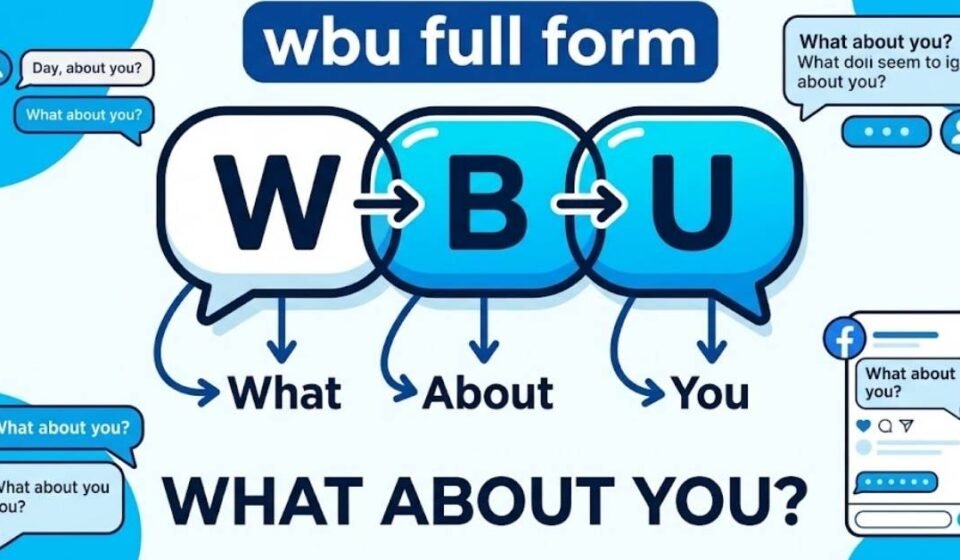
Someone texts you “I’m good, wbu?” and you freeze for a second. Is it a typo? A code? Should you answer fast or ignore it?
Here’s the short version. WBU means “What About You?” It’s a quick way to hand a question back to the other person, and it shows up in almost every casual chat.
Quick Answer
WBU meaning in text is simple: it stands for “What About You?” You use it right after you answer something, so the other person can share their side too.
Some people also read it as How About You, which lands in the same place. It’s informal language, so it fits friends, family, and casual chats best.
WBU Meaning in Text: The Basic Idea
Think of WBU as a tiny conversational bridge. You answer a question, then pass the ball back with three letters instead of four words.
It works as a returning a question shortcut. Someone asks how your weekend went, you reply, and WBU keeps the exchange from feeling one sided.
The WBU full form has no hidden twist. It’s one of those texting abbreviations that says exactly what it spells, which is why people pick it up in a single read.
Why Do People Say WBU Instead of “What About You?”
Speed is the big reason. Typing three letters on a phone beats typing a whole phrase, especially in a fast one-on-one text where replies fly back and forth.
There’s also a tone thing. “What about you?” can sound a bit stiff in a relaxed chat, while WBU feels easy and light. It matches the casual tone most text messaging already has.
Habit plays a part too. Once you see short forms in texting a few times, they become muscle memory. You stop thinking about it and just type it.
WBU in Different Types of Conversations
In group chats, WBU usually targets one person. You answer, then add “wbu Sam?” so it doesn’t get lost among five other messages.
In one-on-one texts, it’s more like a handshake. It signals you care about the other side of the story, not just your own.
On WhatsApp or online chats with friends, you’ll see it paired with plans, moods, and food. Something like “Pizza tonight, wbu?” is everyday conversations at its simplest.
How WBU Changes the Flow of a Conversation
A chat without a follow-up question can stall fast. You answer, they read it, and silence follows. WBU fixes that by adding a built-in prompt.
It supports conversation flow because it invites a reply without sounding pushy. The other person doesn’t have to guess what to say next.
It also helps with balanced conversations. When both people share and ask, the chat feels fair and keeping conversations going takes almost no effort.
WBU vs WYD vs HBU: What’s the Difference?
These three get mixed up a lot, so here’s a clean split. Each one asks something different, even though they all show up in similar spots.
- WBU: “What about you?” It returns a question you were just asked.
- WYD: “What are you doing?” It opens a chat by asking about right now. Our WYD meaning is about activity, not a return question.
- HBU: “How about you?” Same job as WBU, with a slightly softer feel.
A quick way to remember it: WYD starts a topic, WBU and HBU bounce one back. That’s the heart of the WBU vs WYD question.
Is WBU Friendly or Too Casual?
In most texts, it’s friendly. It tells the other person you’re interested, which is the opposite of cold. A lot of people read it as showing interest.
Too casual only becomes a problem in the wrong setting. Texting a close friend, it’s perfect. Sending it to a hiring manager, not so much.
Context decides everything. If your chat is already full of slang and emojis, WBU fits right in. If it’s polite and careful, spell it out.
How to Use WBU Naturally
Put it at the end of your answer, never at the start. “Pretty tired today, wbu?” works. “Wbu? Pretty tired today” confuses people.
Keep it tied to something you just said. WBU works best when it follows a real answer, like a follow-up question that grows out of the topic.
Don’t force it into every message. If you drop it after every line, the chat starts to feel like a survey. Use it when you truly want their take.
WBU in Text Messages
In plain text message abbreviations territory, WBU lives at the end of short replies. “Just got home, wbu?” is a good example of how people actually write it.
Lowercase is normal. Capital letters look fine too, but texting habits lean casual, so “wbu” and “WBU” both pass without a second glance.
Punctuation is optional. A question mark helps if the tone could feel flat, though many people skip it and rely on the abbreviation itself.
WBU on Snapchat, Instagram, and Social Media
On Snapchat, WBU pops up in quick replies to snaps and chats. Messages there are short by design, so the abbreviation feels right at home.
On Instagram and in social media DMs, it shows up after story replies and casual check-ins. Someone answers your question about a trip, then asks wbu.
Across social media slang in general, it’s one of the safest abbreviations. It rarely carries a hidden tone, so people understand it instantly.
Can WBU Sound Flirty?
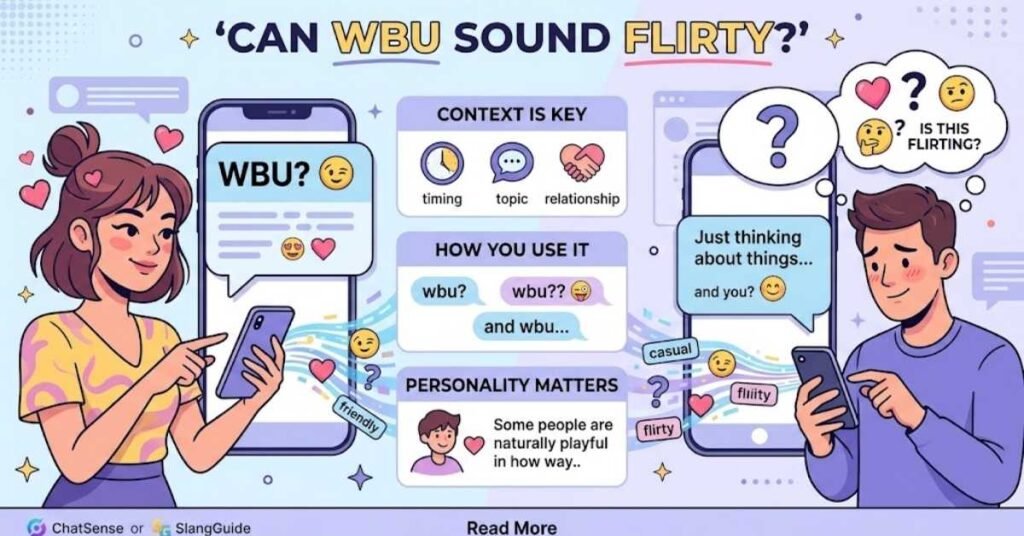
By itself, no. WBU is neutral. The flirty texting vibe comes from everything around it, like emojis, timing, and the question before it.
Take this: “Thinking about you, wbu? 😏” reads very differently from “Studying all night, wbu?” The abbreviation stayed the same while the tone in text messages changed.
If you want a playful message, add a light emoji and a warm lead-in. If you want it plain, keep the sentence short and skip the extras.
How to Reply to WBU
Treat WBU like a normal question and answer it with real detail. “Same here, just watching a show” beats a one word answer every time.
Then, if it fits, send one back. That gives you the natural replies rhythm: they ask, you answer, you ask, they answer.
Here are a few WBU conversation examples you can borrow:
- “I’m good, just tired from work. You?”
- “Pretty chill today. Got any plans?”
- “Same as you honestly, nothing much. How’s your day going?”
Avoid replying with only “idk” or “nothing.” Those feel like abrupt messages and can end a friendly chat early.
WBU vs HBU: Are They the Same?
Mostly, yes. Both mean you’re handing the question back, and most people use them interchangeably without noticing any gap.
The difference is small. HBU meaning leans a little softer, because “how about” sounds like an invitation. WBU leans a little more direct, since “what about” asks for a specific answer.
In real life, pick whichever you type more naturally. Nobody reads a hidden rule into your choice, so don’t overthink it.
Common Mistakes With WBU
The first mistake is dropping it with no context. If you haven’t shared anything, “wbu?” feels random. It needs an answer in front of it.
The second is overusing abbreviations. A message packed with WBU, IDK, TBH, and BRB can feel messy, especially if the other person isn’t fluent in internet slang.
The third is using it in the wrong setting. Formal communication, like a business email, calls for full words. “How about you?” or “And you?” fits better there.
Quick Examples You Can Copy
Sometimes the easiest way to learn a shortcut is to see it in a few real spots. Here are WBU text examples across common situations.
- Daily check-in: “Doing okay, a bit sleepy. Wbu?”
- Plans: “I’m free Saturday afternoon. Wbu?”
- Food: “Craving tacos tonight, wbu?”
- Feelings: “Kind of stressed this week, wbu?”
Each one shares first, then asks. That order keeps the message from feeling like an interview.
When to Skip WBU
Skip it in serious moments. If someone tells you something heavy, a quick WBU can feel cold. Respond to what they said first.
Skip it in professional messages too. A coworker or client expects clear, complete language, so write “And how about you?” instead.
And skip it when you don’t care about the answer. People can tell, and a thoughtful, specific question lands much better than a lazy one.
Other Meanings of WBU
In everyday texting, WBU means “What About You?” almost every time. That covers WhatsApp, Instagram, Snapchat, and nearly all online conversations.
Outside chat, alternative meanings of WBU do exist. For example, WBU is also the short name for the World Blind Union, an international organization. You’d see that in news or official documents, not in texts.
That’s where context clues in texting help. If the message is casual and ends with a question mark, it’s the chat meaning. If it sits in a formal document, check the source.
Conclusion
WBU is a small shortcut with a clear job: it turns a one sided reply into a two sided chat. Use it after you answer, keep it casual, and match it to the person you’re texting.
Have you ever been confused by a texting abbreviation? Drop your favorite one in the comments, and share this with a friend who still asks “wait, what does that mean?”
FAQs
What does WBU mean in text?
It means “What About You?” People type it after answering a question to ask the same thing back.
What does WBU stand for?
WBU stands for “What About You?” Some people read it as “How About You,” and both work the same way.
Is WBU slang?
Yes, it’s everyday text slang. It’s an abbreviation used mainly in casual chats, not in formal writing.
Is WBU formal or informal?
It’s informal. Keep it for friends, family, and relaxed digital communication, and write the full phrase in work settings.
What does WBU mean in texting?
In texting, it works as a conversational shortcut that returns the question to the other person. It usually comes at the end of your reply.
What does WBU mean on Snapchat?
On Snapchat it carries the same meaning: “What About You?” It’s common in quick replies and chats.
Is WBU the same as HBU?
Pretty much. Both hand the question back, though HBU feels slightly softer and WBU a bit more direct.
Can WBU sound flirty?
Not on its own. The flirty feel comes from your emojis, timing, and the words around it.
How do you reply to WBU?
Answer honestly with a bit of detail, then ask something back if it fits. That keeps the chat moving.
Can I use WBU in a professional message?
It’s best to avoid it. In business emails and professional messages, use “And you?” or “How about you?” instead.

Mubeen is a passionate writer and content creator who enjoys sharing useful, engaging, and easy-to-understand information. With a focus on well-researched and reader-friendly content, Mubeen aims to help readers discover valuable insights and reliable information.