
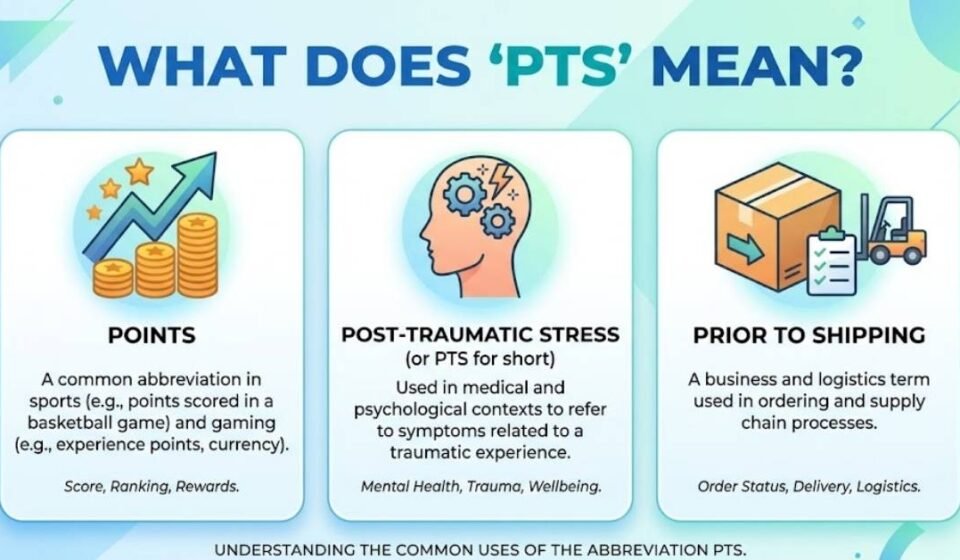
Ever got a message that said “10 pts for you” and wondered if you’d won something? Or maybe you spotted “no pts” under your joke and felt a tiny bit judged.PTS meaning in text is simple. It’s short for points, and people use it to hand out praise, credit,or playful scores in a chat.
Think of it as a tiny scoreboard living inside your text message.Context decides the tone, though. Below, you’ll see how it works across apps, ages, and cultures, plus the moments when you should skip it.
What Does PTS Mean in Text: Quick Meaning
PTS is texting slang for “points.” People type it to give credit, recognition, or a bit of approval for something someone said or did.
It’s casual texting at its smallest, one abbreviated word doing the job of a full compliment.
Most of the time it’s a playful tone thing, not a real score.
Nobody’s keeping a spreadsheet of your approval points.
Simple Examples:
- “Nice idea, +10 pts” means your thinking earned some praise.
- “You brought snacks? Full pts.” means you nailed it.
- “Forgot my birthday? Minus pts.” means friendly teasing.
Notice how the PTS abbreviation works like a number tag.
The word or number beside it sets the mood.
Origin & Background
Nobody can point to the very first text with PTS in it.
The honest story is that it grew out of scoreboards, sports terminology, and gaming slang, where “pts” has long been the short form for points.
Once messaging apps got faster, people borrowed that shorthand for social points.
A point system from a game became a quick way to say “good job” without typing it out.
That’s why you’ll find it more in internet culture and online culture than in any dictionary.
It spreads by habit, not by rules.
Real-Life Conversations
Seeing PTS in action makes it click faster than any definition.
Here are a few chat examples from the places people use it most.
WhatsApp Chat
In a WhatsApp chat, PTS often pops up in family and friend groups.
It’s quick, warm, and easy to read.
Mia: Booked the table for 8.
Sam: Early and organized. +10 pts.
Instagram DMs
In Instagram DMs, it often travels with a reaction emoji.
The emoji tells you the tone before you finish reading.
“Sent you a meme about Mondays.”
“Okay, big pts for that one 😂”
TikTok Comments
Under a clip, TikTok comments turn PTS into public applause.
A creator who nails a plot twist might get “instant pts” from a dozen strangers, which works as peer approval.
Text Messages
In a plain text message, people even award themselves.
“Fixed my bike chain without watching a tutorial. Pts to me.”
Emotional & Psychological Meaning
Under the joke, PTS is about emotional validation.
Humans like being noticed, and “points” turns genuine appreciation into something light and easy to say.
It also nudges social status in a gentle way.
Getting pts feels like a small reward, which is why gamified praise sticks in our heads.
Why People Use It
- It’s quick communication when you’re busy.
- It softens positive feedback so it doesn’t sound cheesy.
- It allows friendly teasing without sounding harsh.
- It adds a bit of playful competition to a normal chat.
A Real-Life Scenario
Here’s a made-up but very common moment.
Dana texts her roommate Priya: “Dishes done. Laundry folded.”
Priya replies: “Okay, 20 pts. Don’t let it go to your head.”
Dana grins, because she didn’t need a speech, she needed her effort recognition.
Usage in Different Contexts
The same three letters shift with who’s on the other end.
Your communication style with a best friend isn’t the one you use with a manager.
1. Social Media
On social media, PTS is loud and public.
You’ll spot it in captions, replies, and comments as a form of social recognition.
2. Friends & Relationships
In friendship chats, it’s mostly teasing.
In relationship texting, it can sound affectionate: “You remembered my coffee order. 50 pts.”
Keep an eye on mood, though.
If your partner is stressed, a points joke can land flat.
3. Work / Professional Settings
In a casual workplace chat with teammates you know well, a quick “pts for fixing that bug” can work.
Formal emails and presentations need real words, so write “great work” instead.
4. Casual vs Serious Tone
Casual conversation welcomes PTS.
Serious conversations and sensitive topics don’t.
Here’s a simple test.
If you wouldn’t crack a joke in that moment, don’t drop pts either.
When NOT to Use It
Skip it during arguments, grief, or bad news.
“Great apology, minus pts” in the middle of a fight reads as an insult, not humor.
Skip it with clients, new bosses, and anyone you barely know.
Respectful communication starts with reading the room before you try a joke.
Common Misunderstandings
A lot of confusion comes from how many places “pts” shows up.
Let’s clear up the big three.
1. Thinking It Always Means Numbers
It doesn’t.
Sometimes it’s just “pts for effort,” with no score attached.
2. Confusing Tone
The same message can be sarcasm or genuine appreciation.
Check the emoji context and the conversation tone before you decide how to feel.
3. Mixing It with Other Meanings
Outside texting, “pts” appears as a technical abbreviation and academic shorthand.
You’ll see it in a grading system, a leaderboard, or a box score, where it simply means points scored.
PTS in Gaming and Sports Chats
Gamers and sports fans were using “pts” long before it reached everyday texting.
A leaderboard shows who has the most pts, and a scoreboard shows who’s winning right now.
That’s why the slang feels so natural in those groups.
Say your friend lands a clutch shot in a match, and someone types “20 pts for that.” Nobody blinks, because score tracking is already part of the gaming rewards culture.
Here’s the twist.
Friends carry that habit into regular chats, so “pts” now rewards a good meal choice or a quick reply, not just a win. It’s gamified praise with a performance tracking vibe, minus the stats.
If you’re new to a group, watch how people use it first.
A few messages will show you whether pts mean real ranking talk or just friendly humor.
PTS vs PTSD: Why the Mix-Up Matters
Some readers see PTS and think of PTSD, a real medical abbreviation for post-traumatic stress disorder.
The two are unrelated, and that’s why PTSD confusion happens, especially for non-native English speakers.
Never joke about PTSD in a chat.
It’s a serious condition, and a careless comment can hurt someone who lives with it.
Comparison Table
| Term | What it means | Tone | Best used |
| PTS | Points, credit, or approval | Playful | Friends, group chats |
| Props | Respect or credit for something done well | Casual, warm | Social media, friends |
| Kudos | Formal-ish praise | Neutral, positive | Work, school |
| Pts (scoreboard) | Points scored in a game or class | Factual | Sports, gaming, grading |
| PTSD | Post-traumatic stress disorder | Serious, medical | Health conversations only |
Variations / Types
PTS rarely travels alone.
Words and numbers around it change the message completely.
- Full pts means top marks.
- Extra pts or bonus pts mean you went above and beyond.
- Minus pts is playful criticism.
- No pts means you earned nothing this time.
- +10 pts, earn pts, and lose pts treat the chat like a game.
- Big pts and instant pts show bigger, faster excitement.
How to Respond When Someone Uses It
You don’t need a clever line.
A short, natural reply keeps the conversational tone going.
Casual Replies
- “Thanks, I’ll take them.”
- “Haha, put them on my tab.”
Funny Replies
- “Cashing these in for pizza.”
- “Do points convert to snacks?”
Mature Replies
- “Appreciate that. Glad it helped.”
- “Thanks, that’s kind of you.”
Respectful Replies
- “Thank you, that means a lot.”
- “I appreciate you noticing.”
Regional & Cultural Usage
No official data tracks PTS by country.
So treat these as general patterns, not hard rules.
Western Culture
In English chats across Western countries, it’s common among friends and in gaming circles.
It leans casual and humorous.
Asian Culture
Many young users on global platforms pick up English internet abbreviations and mix them with their own language.
Local slang often does the same job, so don’t assume everyone shares your meaning.
Middle Eastern Culture
In bilingual chats, English chat abbreviations show up next to Arabic or other languages.
Warmth matters, so keep teasing gentle, especially in mixed or family groups.
Global Internet Usage
Because TikTok, Instagram, and gaming connect people worldwide, online slang like this travels fast.
One meme can carry it across continents in days.
Generational Differences
Gen Z slang and Millennials both use PTS, though often with different jokes.
Older adults may read it as a literal score or a medical term, so a quick explanation goes a long way.
Is It Safe for Kids?
For the most part, yes.
PTS is child-friendly slang at heart, since it’s about praise and points.
The risk comes from tone.
Repeated “minus pts” can turn into playful criticism that feels like bullying to the person on the receiving end.
Good internet safety means talking, not banning.
Ask your child what it means in their chat, and context clues will tell you the rest.
Texting Etiquette Tips for Using PTS
A few habits keep your texting etiquette solid.
- Match the other person’s energy.
- Add an emoji when sarcasm might be unclear.
- Give pts for real effort, not just easy wins.
- Don’t keep score on people you care about.
Conclusion
PTS means points, and it’s a small, friendly way to say “nice one” in digital communication.
Used with the right person at the right time, it adds humor and emotional connection to your chats.
Read the context, watch the tone, and skip it when things get serious. Got a favorite pts moment? Share it in the comments, and send this guide to the friend who keeps asking what it means.
FAQs
1. What does PTS stand for in texting?
It stands for points. People use it to give credit or approval in a chat.
2. Is PTS always about numbers?
No. Sometimes it’s a general “pts for trying” with no number at all.
3. Can PTS be used sarcastically?
Yes. “Minus pts” after a bad joke is a classic example.
4. Is PTS formal or informal?
It’s informal. Save it for friends and relaxed chats.
5. What’s the difference between PTS and “props”?
Both give credit. PTS plays with a scoring idea, while props is plain respect.
6. Can I use PTS at work?
Only with close teammates in casual channels. Use full words in formal emails and presentations.
7. Why do people use PTS instead of “points”?
It’s faster to type. It also feels more playful, like a game score.

Mubeen is a passionate writer and content creator who enjoys sharing useful, engaging, and easy-to-understand information. With a focus on well-researched and reader-friendly content, Mubeen aims to help readers discover valuable insights and reliable information.