
LCR means “Like, Comment, Repost.” It’s a quick social media abbreviation creators use when they want you to support my post with those three actions.
You’ll see it in captions, Reel comments, and group chats across TikTok, Instagram, Facebook, and X (Twitter).
Ever Seen “LCR” Online and Felt Confused?
You’re scrolling late at night and a stranger’s caption ends with “LCR please.” Do you owe them something? Is it a code? Is it rude?
Relax. Plenty of people feel lost the first time they meet this bit of internet slang.
Most of us learned online slang by guessing from context, and that works until it doesn’t. One wrong guess and you’re replying to a comment section with the wrong energy.
This beginner guide clears it up in plain words so you never have to guess again.
What Does LCR Mean?
LCR is a text abbreviation for “Like, Comment, Repost.” Someone who types it is making an engagement request to their audience.
They want three small actions that tell a platform people care about the post.
The term lives mostly in creator communities and online communities. It’s casual communication, so you won’t find it in professional emails or formal communication.
Think of it as a tap on the shoulder, not a command.
Featured Snippet Style Definition
LCR (Like, Comment, Repost) is a social media slang term used to ask followers to like a post, leave a comment, and share or repost it. Creators, small businesses, and fan pages use it to boost post performance and content visibility.
Simple Meaning of LCR
Here’s the simple meaning without any fluff: please like it, talk about it, and pass it along. That’s the whole deal.
Each action does a different job, so it helps to see them side by side.
- Like: a quick sign that you enjoyed the post
- Comment: proof that the post sparked a discussion
- Repost: a way to reach more people through your own page
These three engagement metrics tell a platform the content is worth showing around. That’s why content creators love asking for all three at once.
It’s the social media shortcut for “help me out, please.”
Where Is LCR Used?
LCR travels well because it’s short and easy to type. It shows up wherever people post, chat, and promote content.
Each social media platform gives it a slightly different flavor.
TikTok
On TikTok, TikTok creators drop LCR in captions or pinned comments. A “repost” there often means sharing the video to your own feed or sending it to friends.
Smaller accounts use it a lot because every extra view counts.
On Instagram, you’ll spot LCR in story captions, Instagram Reels, and DMs between small creators. Many use it in engagement groups where members agree to support each other’s posts.
It’s quick, friendly, and usually low pressure.
Facebook users lean on LCR for page promotions, local business updates, and community pages. A “repost” there normally means hitting share.
Group admins often add it to posts about events or charity drives to spread awareness.
X (Twitter) and Other Platforms
On X (Twitter), you’ll see it beside a tweet asking for a like, a reply, and a repost. Threads and Pinterest users borrow it too, though it’s less common there.
The idea stays the same, even when the buttons change names.
Why Do People Use LCR?
Nobody types LCR for fun. There’s always a goal behind it, and most goals are pretty human.
Let’s break down the three big ones.
To Increase Visibility
Posts live or die in the first hour. An early burst of likes, comments, and reposts can push a video in front of a bigger digital audience.
That’s the logic behind increase visibility tactics like LCR.
Does it work every time? No. It simply gives a post a fair shot at organic reach.
To Save Time
Typing “please like, comment, and share my post” is a mouthful. LCR says it in three letters.
That’s quick communication at its finest.
It also keeps captions clean. You get your message across without clogging the post.
To Build Community
LCR isn’t only about numbers. It also signals teamwork and community support.
When people show up for each other, follower engagement feels real instead of forced.
Many creator support systems run on this idea. You support me today, I’ll support creators like you tomorrow.
Real-Life Examples of LCR
Definitions are nice, but stories stick better. Here are four everyday scenes where LCR pops up.
You’ll probably recognize at least one.
Example 1: TikTok Creator
Maya posts a 20 second baking video and writes, “Trying to hit 1K views today, LCR if you can!” Her friends comment, a few repost, and the video climbs.
She isn’t begging. She’s inviting people to help, and that tone matters.
Example 2: Small Business Promotion
A candle shop owner shares a new scent on Facebook with “LCR to help a small business grow.” Neighbors like and share it in local groups.
That’s cheap business promotion powered by community engagement.
Example 3: Fan Account
A K-pop fan account posts a fan-made edit and adds “LCR for the group.” Fans jump in to push the post higher.
It’s a classic fan community move built on shared love.
Example 4: Friendship Support
Your friend finally launches her art page and texts you, “LCR my first post?” You like it, drop a warm comment, and repost it to your story.
That’s friendship support in its simplest form.
LCR vs Similar Terms
LCR has cousins, and mixing them up can cause awkward moments. The table below keeps them straight.
Skim it once and you’ll be set.
| Term | Full Form | What It Asks For | Typical Use |
| LCR | Like, Comment, Repost | Three actions on one post | Boosting a single post |
| LC | Like and Comment | Two actions, no sharing | Light support |
| SFS | Shoutout for Shoutout | A mutual promotion swap | Page growth |
| F4F | Follow for Follow | A follower exchange | Gaining followers |
| CF | Close Friends | Private list sharing | Private sharing group posts on Instagram |
The big difference? LCR targets one post, while F4F and SFS target your profile or page.
Pick the term that matches what you actually want.
When Should You Use LCR?
LCR works when the context fits. In the wrong place, it can feel off.
A quick checklist helps you decide.
Use LCR When
- You’re launching something new, like a video, product, or page
- You’re talking to a friendly target audience that already knows you
- You’re inside a creator collaboration group with clear rules
- You’re raising awareness for a cause or event
Avoid LCR When
- You’re writing business communication or academic writing
- You’re posting to people who don’t follow you yet
- You’re using it on every single post
- Your content is weak and you hope LCR will rescue it
Common Misunderstandings About LCR
A few myths keep floating around. Clearing them up saves you from awkward replies and wasted effort.
Here are the three that come up most.
Thinking LCR Has Only One Meaning
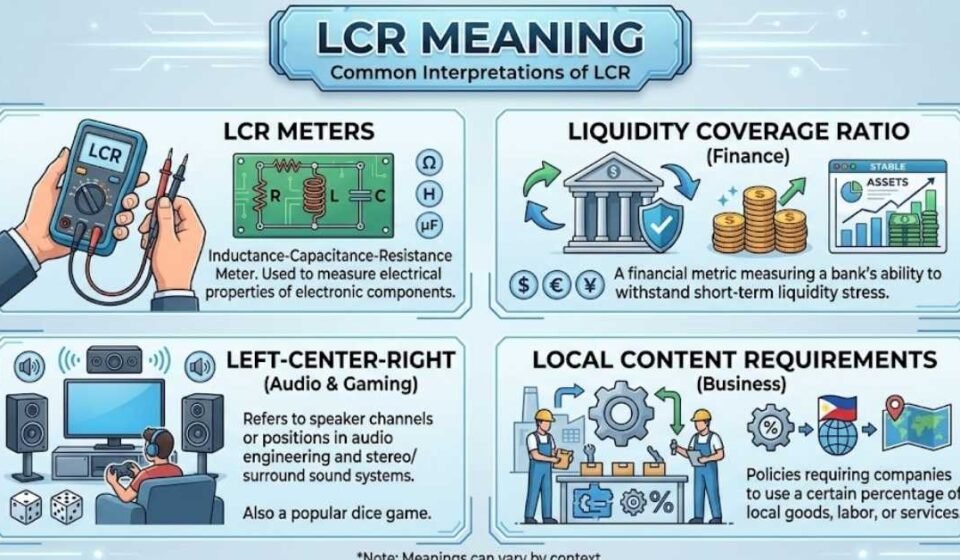
Context matters. In telecom, LCR can mean Least Cost Routing, a method for sending calls through the cheapest route. In electronics and engineering, it can describe an inductor, capacitor, and resistor setup (L, C, and R) or an LCR meter.
Those are niche meanings. On a social feed, it nearly always means Like, Comment, Repost.
Assuming LCR Guarantees Virality
Let’s be honest here. No platform has confirmed that LCR triggers an algorithm boost.
It can encourage engagement signals, but viral content still needs a strong hook.
Think of LCR as a nudge, not a magic wand. Great content does the heavy lifting.
Seeing LCR as Spam
LCR becomes spam when it’s overused or pasted under every post. Used sparingly with a real reason, it’s just a polite ask.
Frequency and tone decide how it lands.
Pro Tips for Using LCR Smartly
Want LCR to help instead of annoy? A few habits make a big difference.
These tips come from how healthy online etiquette usually works.
Keep It Natural
Write it the way you’d say it to a friend. “LCR if this helped!” feels warmer than a stiff, repeated block of text.
Use natural language and your confidence will show.
Pair LCR With Valuable Content
People support posts they enjoy. Share quality content that’s entertaining, educational, inspiring, or problem-solving.
When the valuable content is solid, the ask feels earned.
Avoid Begging
Skip lines like “please, I’m desperate.” Begging pushes people away and weakens your online presence.
A relaxed, honest request works far better.
Understand Your Audience
A Gen Z crowd on TikTok may love LCR, while a professional LinkedIn-style audience may find it odd. Check how your viewers and followers talk before you try it.
Matching communication context keeps you from sounding out of place.
Does LCR Help Your Social Media Growth?
Short answer: sometimes, in small ways. LCR can spark early momentum, which helps a post get noticed by more of your digital audience.
It won’t fix a weak content strategy on its own.
For lasting audience growth, mix LCR with steady posting, clear niches, and real conversations. Track content performance and see which posts earn natural reactions.
That data tells you what to make next.
How to Ask for Engagement Without Sounding Pushy
You don’t always need LCR. Sometimes a question works better, like “Which one would you pick?” It invites user interaction without feeling like a chore.
That’s one of the best engagement tips around.
You can also reward supporters. Reply to comments, repost their work, and thank people publicly.
A two-way street builds loyalty that outlasts any trend.
Final Thoughts
LCR means Like, Comment, Repost, and it’s one of the most useful bits of social mediaterminology for anyone who posts online. Now you can read it, use it, or skip it with confidence. Context decides everything, so trust your gut.
If you remember one thing, make it this: support goes both ways. Back creators you enjoy and they’ll likely back you. Have you used LCR before? Drop your story in the comments and sharethis guide with a friend who keeps asking what it means.
FAQs
Is LCR a bad thing?
No, LCR isn’t bad on its own. It’s a polite engagement request that helps small creators get seen. It only turns annoying when people spam it or use it without giving anything back.
What does LCR mean on TikTok?
On TikTok, LCR means “Like, Comment, Repost.” TikTok creators use it in captions and comments to ask for video performance support. It’s a friendly nudge, not a rule.
Is LCR the same as sharing?
Not quite. Sharing is just one piece of LCR, since LCR also asks you to like and comment. A repost puts the content on your page, while a share might send it privately.
Can businesses use LCR?
Yes, businesses can use it, especially small businesses running brand promotion or local campaigns. Keep the tone casual and the ask rare. Pair it with useful posts so followers want to help.

Mubeen is a passionate writer and content creator who enjoys sharing useful, engaging, and easy-to-understand information. With a focus on well-researched and reader-friendly content, Mubeen aims to help readers discover valuable insights and reliable information.