
FOMO stands for Fear Of Missing Out. It’s that uneasy feeling you get when everyone else seems to be having a great time and you’re not part of it.You’ve probably typed it, seen it, or felt it this week. Maybe a friend posted beach photos while you were stuck at work. Maybe a group chat planned dinner without you noticing until it was over. That tight, restless feeling has a name now, and it’s FOMO.
This guide breaks down everything about the term. Where it came from, how people use it on different apps, what it means in marketing and investing, and how to reply when someone drops it in a chat.
What Does FOMO Mean in Text & Chat?
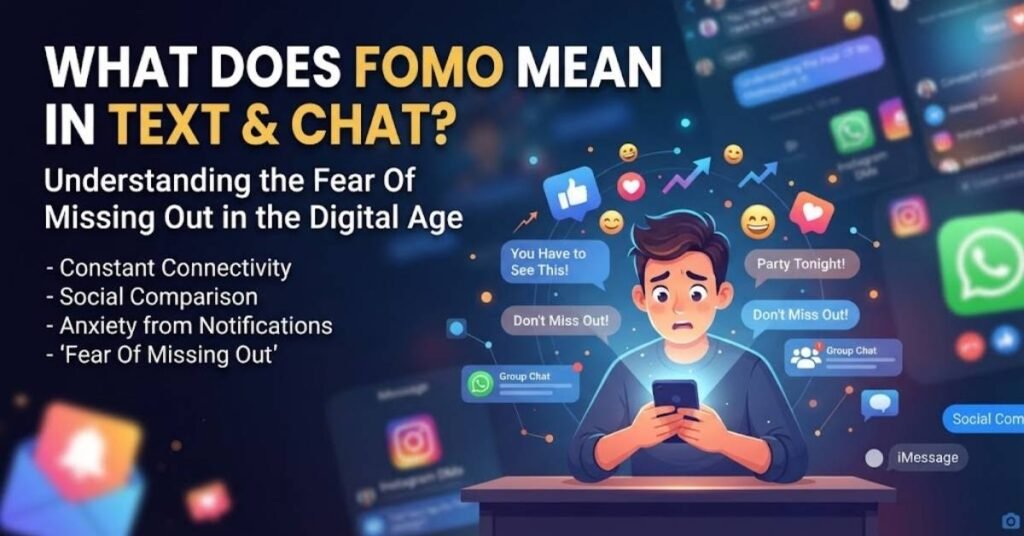
In simple terms, FOMO describes the worry that something exciting is happening without you. It’s not just sadness. It’s a mix of jealousy, anxiety, and a nagging urge to check what you’re missing.
People use it in casual texting almost like a shorthand for “I wish I was there too.” It’s quick, it’s relatable, and everyone gets it instantly.
Simple Meaning of FOMO
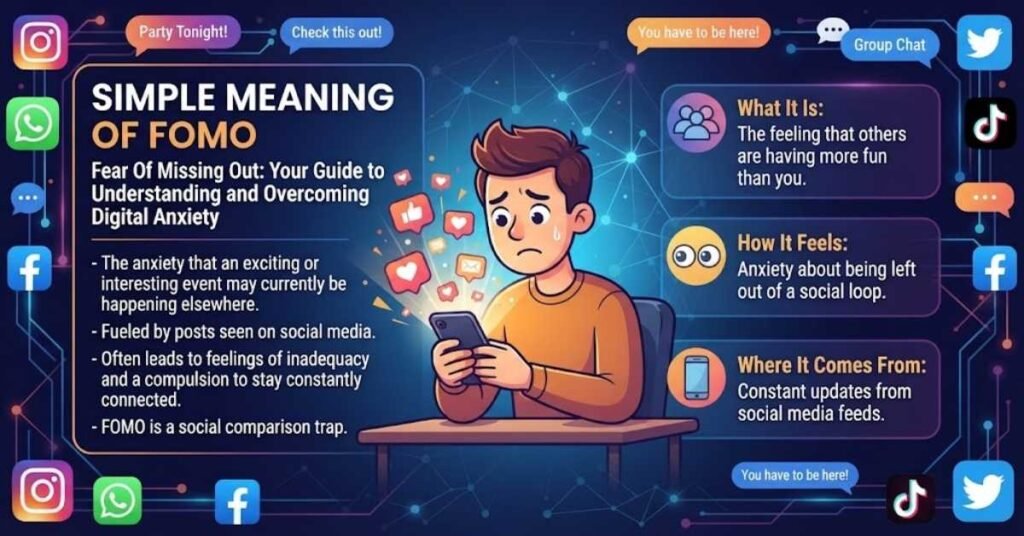
At its core, FOMO meaning in text boils down to one idea: the fear of being left out of something good. It could be a party, a sale, a trending challenge, or even a conversation.
The term captures a very human worry. Nobody likes feeling excluded from the fun.
Quick Chat Examples
Here’s how it shows up in real conversations:
- “Ugh, I have major FOMO watching your Vegas story.”
- “Skip the trip? Nah, I’d get serious FOMO.”
- “Everyone’s at the concert and I’m home. Total FOMO moment.”
FOMO vs. Real Interest: Knowing the Difference
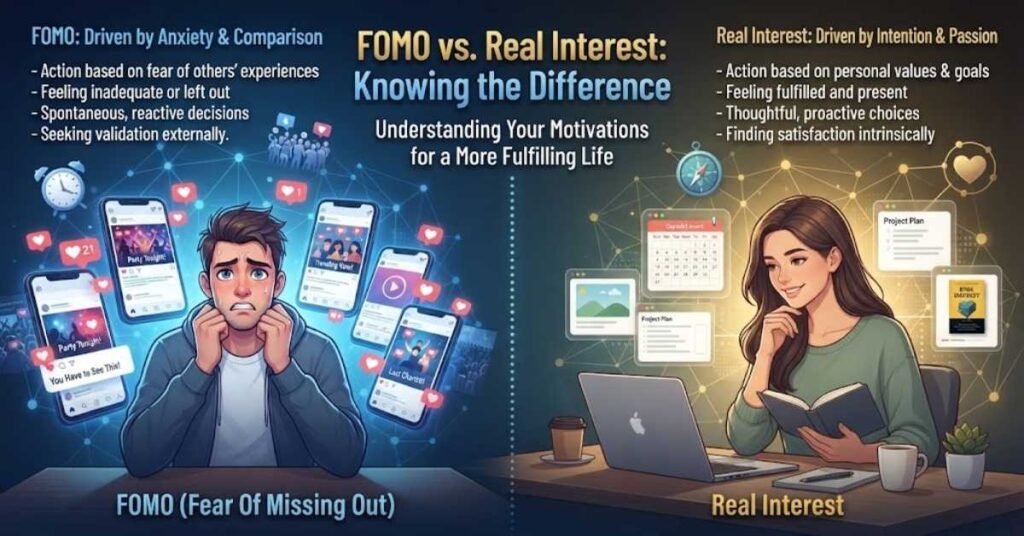
Not every urge to join something is FOMO. Sometimes you genuinely want to do a thing, and that’s just real interest, plain and simple.
The difference matters more than people think. FOMO is reactive. You see a post, and suddenly you need to be there too, even if you weren’t planning on it five minutes earlier.
Genuine desire comes from within, not from a screen. If you’d still want to go to that concert even without seeing anyone’s story about it, that’s real interest, not fear of missing out.
How FOMO Affects Social Media Habits
FOMO quietly shapes how often people check their phones. That itch to refresh Instagram one more time? Often it’s FOMO talking, not boredom.
Studies on social media habits link constant scrolling to this exact fear. People check Instagram Stories and Snapchat Stories not because they need information, but because they’re scared of missing an update.
This constant checking feeds into social comparison. You start measuring your weekend against someone else’s highlight reel, and that rarely ends well for your mental well-being.
Full Form, Stands For & Short Meaning of FOMO
The FOMO full form is Fear Of Missing Out. It’s a straightforward abbreviation, but the feeling behind it is layered.
People often ask what the letters stand for individually. F is Fear, O is Of, M is Missing, and O is Out. Simple as that.
Short Meaning of FOMO
In one line: it’s the discomfort of thinking others are enjoying something better than what you’re doing right now.
Common Ways People Write FOMO
You’ll spot it written a few different ways online:
- All caps: FOMO
- Lowercase: fomo
- With emphasis: “I’ve got MAJOR fomo”
- Hashtag style: #fomo
Example Sentences
- “I can’t believe I missed the sale, total FOMO.”
- “She has FOMO about every trip she doesn’t join.”
- “Don’t let FOMO decide your weekend plans.”
Origin, History & First Known Use of FOMO
The term didn’t just appear overnight. It has roots that trace back further than most people expect.
Why FOMO Became Popular
FOMO picked up steam alongside social media growth. As more people shared their lives online, more people started comparing their own lives to those highlight reels.
Marketers noticed the pattern too, and the word spread fast because it named something everyone already felt but couldn’t quite describe.
First Known Uses
Researchers trace early written use of the concept to the mid 2000s, tied closely to the rise of social networking sites. The early 2000s saw the internet shift from static pages to constant updates and feeds.
By 2013, FOMO had earned a spot in the Oxford Dictionary, cementing it as a real, recognized word rather than just internet slang.
Modern Internet Culture
Today, FOMO is baked into modern internet culture. It shows up in memes, podcasts, marketing emails, and even therapy sessions discussing digital habits.
How People Use FOMO in Daily Conversations
FOMO isn’t reserved for big events. People drop it into everyday texting for the smallest things too, like missing a lunch order deadline.
Common Situations Where People Use FOMO
The term fits into almost every part of daily life. Here’s where it shows up most.
Social Events
Parties, get togethers, birthday dinners. If a friend group posts photos without you, FOMO hits fast.
Food & Restaurants
New restaurant opened and everyone’s raving about it? That craving to try it before it’s “old news” is classic FOMO.
Travel
Seeing someone’s vacation photos or beach trip story often triggers travel FOMO, one of the most common versions of the feeling.
Gaming
Limited time events and seasonal events in games create real urgency. Miss the window, miss the reward, forever.
Shopping
Flash sales are basically built on FOMO. Limited stock messages push people to buy fast, before they “miss out.”
Everyday Text Examples
- “Not gonna lie, I have weekend FOMO already.”
- “Skipping this one, but ask me again and I’ll probably cave from FOMO.”
Why It Feels Relatable
Everyone has felt left out at some point, whether it’s a childhood memory or last week’s group chat. That shared experience is exactly why the word spread so widely.
FOMO Meaning Across WhatsApp, Instagram, TikTok & Snapchat
Each platform gives FOMO its own flavor. The feeling stays the same, but the trigger changes depending on where you’re scrolling.
On WhatsApp
WhatsApp is mostly private chats and group conversations, so FOMO here usually comes from missing plans discussed in a thread.
Example
“Bro why didn’t anyone tag me, I have FOMO reading this whole chat now.”
On Instagram
Instagram thrives on lifestyle content and influencer posts. Scrolling through curated vacation photos is basically a FOMO machine.
Example
“Her Instagram Stories from Bali are giving me the worst FOMO ever.”
On TikTok
TikTok moves fast, and viral challenges create urgency. Missing a trend while it’s hot feels like missing the moment entirely.
Example
“Everyone did the trend already and now I have FOMO trying to catch up.”
On Snapchat
Snapchat is built on real time sharing. Snap stories disappear, so the fear of missing something feels even more immediate here.
Example
“Didn’t check Snap for two hours and now I’ve got FOMO from three different friend stories.”
Different Meanings of FOMO in Other Fields
Outside of casual chats, FOMO shows up in professional spaces too, often with real financial or behavioral consequences.
Marketing
In digital marketing, FOMO is a tool. Words like “limited stock” or “only 3 left” are designed to trigger urgency and speed up buying decisions.
Investing & Cryptocurrency
Investors chase rising prices out of pure FOMO, buying assets simply because everyone else seems to be profiting. This is a well documented pattern in investment behavior, especially around cryptocurrency spikes.
Psychology
Psychologists study FOMO as a genuine emotional response tied to social anxiety and low self esteem. It’s not just internet talk, it’s a documented behavioral pattern.
Gaming Communities
In gaming communities, FOMO drives players to log in daily so they don’t lose limited-time rewards tied to game updates.
Common Confusions, Mistakes & Wrong Interpretations
People mix up FOMO with other feelings all the time. Getting the meaning wrong changes how a whole sentence reads.
Common Mistakes
Here are the slip ups people make most often.
Thinking FOMO Means Excitement
FOMO isn’t excitement itself. It’s the anxious feeling of missing excitement that belongs to someone else.
Confusing It With YOLO
YOLO means “you only live once” and pushes you toward taking action. FOMO is the opposite pull, driven by fear rather than motivation.
Using It in Serious Situations
Some people misuse FOMO for genuinely serious losses, like missing a funeral. That’s not the right context, since the term is meant for casual, low stakes situations.
Wrong Interpretations
A few people assume FOMO only applies to social events. In reality it stretches into shopping, gaming, and even career choices.
Example of Incorrect Usage
“I have FOMO about my grandma’s surgery” is incorrect. FOMO fits lighter contexts, not medical emergencies.
Similar Terms, Alternatives & Related Slang
Slang rarely exists alone. FOMO has a whole family of related terms worth knowing.
Related Slang Words
YOLO
You Only Live Once. Encourages spontaneous action, the opposite energy of FOMO.
JOMO
Joy Of Missing Out. This one flips the fear into relief, celebrating staying home instead of stressing about it.
FOBO
Fear Of Better Options. This describes hesitation from having too many choices, rather than fear of missing just one thing.
Social Anxiety
While not slang, social anxiety often overlaps with FOMO, since both involve worry about social situations and how you’re perceived.
Similar Expressions
Phrases like “feeling left out” or “missing the moment” carry the same weight as FOMO without using the actual term.
Quick Comparison
| Term | Meaning | Feeling |
| FOMO | Fear of missing something | Anxious |
| YOLO | Live for the moment | Bold |
| JOMO | Joy of skipping out | Relieved |
| FOBO | Fear of a better choice | Indecisive |
Examples of FOMO in Real Chat Situations
Seeing the word in action makes it easier to use naturally in your own texts.
Friends Chat
“You guys went without me? Instant FOMO, not gonna lie.”
Travel Example
“Watching your Bali reel gave me full blown travel FOMO.”
Gaming Example
“That event ends tonight and I’m not home, pure FOMO right now.”
Shopping Example
“Only 2 left in stock. My FOMO just made me click buy.”
TikTok Example
“This sound is everywhere and I still haven’t used it, major FOMO.”
Group Chat Example
“Reading this whole chat after the fact hits different, so much FOMO.”
How to Reply When Someone Says FOMO
Knowing how to respond keeps the conversation flowing naturally instead of leaving it hanging.
Friendly Replies
- “Don’t worry, we’ll do it again soon.”
- “Next time you’re coming, no excuses.”
Funny Replies
- “That’s what you get for skipping game night.”
- “Should’ve teleported, honestly.”
Supportive Replies
- “I get it, missing out stings. Let’s plan something this week.”
- “Your turn to pick next time, deal?”
Casual Text Examples
“Lol same, wish I was there too” works in almost any situation without overthinking it.
Is FOMO Still Popular? Trends & Online Usage
FOMO hasn’t faded. If anything, it’s more relevant now than when it first went mainstream.
Why FOMO Still Exists
As long as social platforms show real time updates, FOMO will keep happening. The feeling is tied directly to how connected everyone stays throughout the day.
Where FOMO Is Most Popular
It’s especially common among younger users active on TikTok and Instagram, though adults use it just as often in online conversations and even at work.
Online Trends
New spins on the term keep appearing, like “JOMO era” trending as people push back against constant comparison and embrace staying in.
Search Popularity
Search interest for FOMO meaning in text and related phrases stays steady year over year, showing this isn’t a passing trend but a lasting part of digital language.
FOMO in the Workplace and Career Choices
FOMO doesn’t stop at parties and travel. It creeps into work life too, especially around job offers, promotions, and networking events people feel pressured to attend.
Someone might stay late at a work event purely out of FOMO, worried they’ll miss a connection or opportunity if they leave early. This version is less playful, but it’s just as real.
Conclusion
FOMO captures something almost everyone has felt at some point, that nagging pull of “what am I missing right now.” Whether it shows up in a group chat, a TikTok scroll, or a flash sale countdown, the meaning stays consistent.
Understanding where it comes from and how to spot it in your own habits can genuinely help. Next time you catch yourself refreshing an app out of pure FOMO, maybe close it instead and just enjoy where you actually are.Got a story about your own FOMO moment? Drop it in the comments, we’d love to hear it.
FAQs
What does FOMO stand for in texting?
FOMO stands for Fear Of Missing Out, used when someone feels anxious about missing an experience others are enjoying.
Is FOMO a bad thing?
Not always. A little FOMO can push you to try new things, but too much can hurt your mental well-being and lead to impulsive buying decisions.
Where is FOMO most commonly used?
It’s most common on Instagram, TikTok, and Snapchat, though it shows up in WhatsApp chats too.
What is the opposite of FOMO?
JOMO, or Joy Of Missing Out, is considered the direct opposite.
Do adults use the word FOMO?
Yes, adults use it regularly, especially in workplace settings and around missed events or opportunities.
Is FOMO internet slang?
It started as internet slang but has since become an officially recognized dictionary word, used in both casual and professional contexts.

Mubeen is a passionate writer and content creator who enjoys sharing useful, engaging, and easy-to-understand information. With a focus on well-researched and reader-friendly content, Mubeen aims to help readers discover valuable insights and reliable information.