
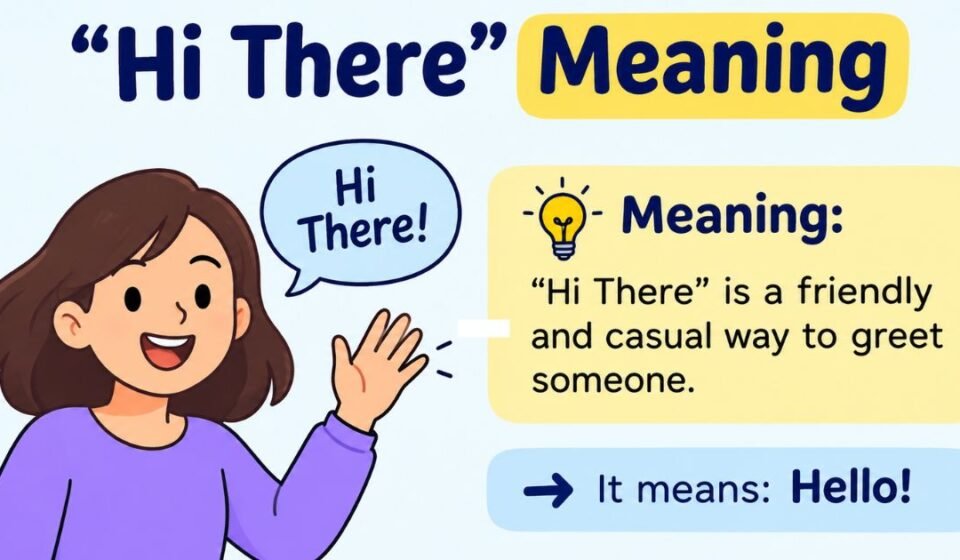
“Hi there” is one of the most common greetings in the English language. People use it every day, in person, on the phone, and in text messages. Yet many people never stop to think about what it actually means or where it came from.
This article breaks down the true meaning of “hi there,” its history, and how to use it correctly in different situations. By the end, you will understand this small phrase much better than before.
Why Does Your Brain Struggle to Define This Greeting?
Most people can use “hi there” without thinking twice. But if you ask someone to explain its exact meaning, they often pause. This happens because greetings are learned through habit, not through direct study.
Our brains store greetings as full phrases, not as separate words with individual meanings. This is called “chunking.” When you hear “hi there,” your mind processes it as one social signal, not as “hi” plus “there.” That is why breaking it apart feels strange.
There is also an emotional layer to this confusion. Greetings carry tone, warmth, and intent. A simple dictionary definition cannot capture the friendly, casual feeling that “hi there” gives off. This is why explaining it in plain words is harder than just using it.
Here are a few reasons your brain struggles with this task:
- Greetings are automatic responses, not conscious choices
- Tone and body language add meaning that words alone cannot show
- The phrase is used in many contexts, making one fixed definition difficult
- Native speakers absorb it through repetition, not formal learning
Core Concepts and Historical Evolution
To understand “hi there,” it helps to look at its two parts separately before putting them back together.
“Hi” is an informal greeting. It became popular in the early 1900s in the United States, largely because of the telephone. Early phone users needed a short, easy word to open a call, and “hi” fit that need perfectly. Before this, “hello” was more common, but it felt slightly formal for casual chats.
The word “there” in this phrase does not point to a physical location. Instead, it works as a softener. It makes the greeting feel more personal and directed at the listener, almost like saying “hi, you.” This small addition changes the tone from plain to warm.
| Element | Origin | Function |
| Hi | Early 1900s American English | Informal opening word |
| There | Old English adverb | Adds warmth and direction |
| Hi there | 20th century combination | Friendly, casual greeting |
Over time, “hi there” moved from spoken conversation into writing, advertising, and now digital messages. It became a symbol of friendliness that feels neither too formal nor too careless.
How Context Shapes Usage: Hi There in Different Settings
The meaning of “hi there” does not change much, but its effect does. Context decides whether it feels warm, awkward, or even out of place.
In casual settings, such as chatting with a friend or greeting a neighbor, “hi there” feels natural and friendly. It shows openness without being overly familiar. In professional settings, the phrase can still work, but it depends heavily on the relationship between the two people.
Here is a simple breakdown of common settings:
- Personal conversations: Feels warm and welcoming among friends or family
- Customer service: Common in chat support to sound approachable
- Workplace emails: Works for informal teams, but risky for formal clients
- Text messages: Popular as a light, friendly opener
- Public speaking: Rarely used, since it feels too casual for large audiences
Digital communication has changed how often we see this phrase. Chatbots, email marketing, and live chat support widely use “hi there” because it sounds human and approachable. Brands often choose it over “hello” to seem less robotic and more personal.
Literary and Cultural References: Tracing Hi There Through Text
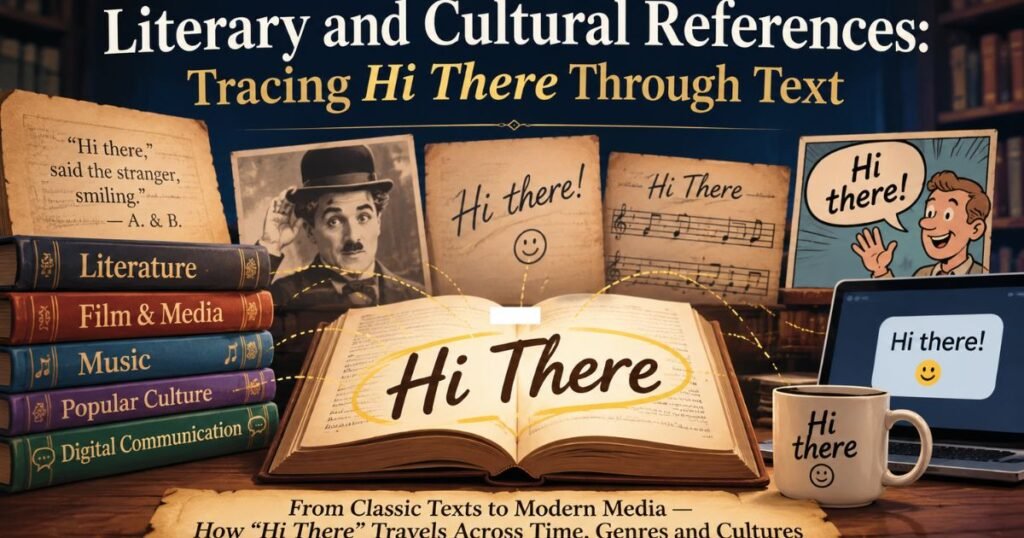
“Hi there” has appeared in books, films, and songs for decades. Writers often use it to show a character’s friendly or easygoing personality. It signals warmth without sounding overly dramatic or formal.
In classic American fiction, “hi there” often marks a first meeting between characters. It sets a light, approachable tone before deeper conversation begins. Screenwriters use it in the same way, especially in comedies and light dramas, to introduce characters who are kind or easygoing.
Pop culture has also shaped how we view this phrase. Television shows from the mid-1900s onward often used “hi there” as an entry line for cheerful or neighborly characters. This cultural pattern still influences how people perceive the phrase today. Many still connect it with friendliness, small towns, or classic sitcom charm.
Even in modern media, “hi there” continues to appear in customer-facing content. Advertisements, mascots, and social media posts often open with it to create an instant sense of friendliness.
Variations and Semantic Neighbors: The Greeting Spectrum
English offers many greetings, and each one carries a slightly different tone. Understanding where “hi there” sits on this spectrum helps you choose the right greeting for the right moment.
| Greeting | Formality Level | Common Setting |
| Hello | Neutral to formal | Business, first meetings |
| Hi | Casual | Friends, everyday chats |
| Hi there | Casual, warm | Friendly conversations, chats |
| Hey | Very casual | Close friends, informal texts |
| Good morning/afternoon | Formal | Workplace, professional settings |
| Greetings | Formal, sometimes stiff | Written communication, formal notices |
“Hi there” sits comfortably between plain “hi” and more expressive greetings like “hey.” It is friendly without being too relaxed, making it a safe choice in many situations.
Some semantic neighbors worth knowing:
- “Hey there” – slightly more casual than “hi there”
- “Hello there” – slightly more formal, often used humorously
- “Howdy” – regional and playful, mostly used in the southern United States
- “Yo” – very informal, mostly used among close friends
Common Mistakes: When Hi There Goes Wrong
Even a simple greeting can be used incorrectly. Knowing common mistakes helps you avoid awkward or unprofessional moments.
One frequent mistake is using “hi there” in very formal emails, especially with senior professionals or clients you have never met. It can come across as too casual and may reduce your credibility in serious business settings.
Also Read This: Blow This Popsicle Stand
Another mistake is overusing the phrase in written messages. Repeating “hi there” in every single message to the same person can start to feel robotic or insincere, especially in customer service scripts.
Common errors include:
- Using it in legal, academic, or highly formal documents
- Repeating it too often in short conversations
- Using it with someone who prefers formal titles or greetings
- Pairing it with overly stiff language, creating a mismatched tone
A greeting should match the tone of the rest of your message. Mixing “hi there” with very formal wording can feel inconsistent and confuse the reader.
Practical Tips and Field Notes

Using “hi there” effectively is not complicated, but a few small habits can improve how it lands.
First, save it for situations where warmth and friendliness matter more than formality. This includes casual work chats, first-time customer interactions, or light social messages.
Second, pay attention to your audience. Younger audiences and casual industries respond well to it. More traditional or formal industries may prefer straightforward “hello” instead.
Quick tips to remember:
- Use it to open friendly, low-stakes conversations
- Avoid it in serious business or legal writing
- Pair it with a warm follow-up line, not a blunt one
- Adjust based on the relationship and platform
The Editor’s Field Note
From an editorial standpoint, “hi there” is a useful tool, but only when used with intention. Editors often flag this phrase in professional writing if it appears in the wrong context, such as formal press releases or official statements.
However, in blogs, customer support scripts, and casual brand voice content, it often improves readability. It feels human and approachable, which many audiences respond to positively.
The key editorial rule is simple: match the greeting to the tone of the entire piece. If the rest of the writing is casual and friendly, “hi there” fits naturally. If the writing leans formal, it is safer to choose a more neutral greeting.
Memory Aids and Social Scripts
If you want to remember when and how to use “hi there,” a few simple memory tricks can help.
Think of “hi there” as a handshake in word form. It works well for first introductions or casual check-ins, but it is not meant for deeply formal situations, just like a handshake is not always the right greeting for every culture or setting.
A helpful mental script is this: use “hi there” when you want to sound approachable but not overly familiar. If the situation calls for more warmth, add a short follow-up question, such as “how are you doing today?”
Simple social scripts:
- Friendly chat opener: “Hi there! How’s your day going?”
- Customer support opener: “Hi there, thanks for reaching out.”
- Casual work message: “Hi there, quick question for you.”
These scripts show how flexible the phrase can be while still keeping a consistent, friendly tone.
Final Thoughts
“Hi there” may seem like a small, simple phrase, but it carries real social weight. It shapes first impressions, sets the tone for conversations, and reflects a balance between friendliness and respect. Understanding its history and proper use helps you communicate more clearly and confidently in both personal and professional settings.
At its core, “hi there” is about connection. It invites conversation without demanding formality, making it one of the most versatile greetings in modern English. Whether you are writing an email, chatting with a friend, or crafting a brand’s voice, knowing when to use this phrase can make your communication feel warmer and more genuine.

Mubeen is a passionate writer and content creator who enjoys sharing useful, engaging, and easy-to-understand information. With a focus on well-researched and reader-friendly content, Mubeen aims to help readers discover valuable insights and reliable information.