
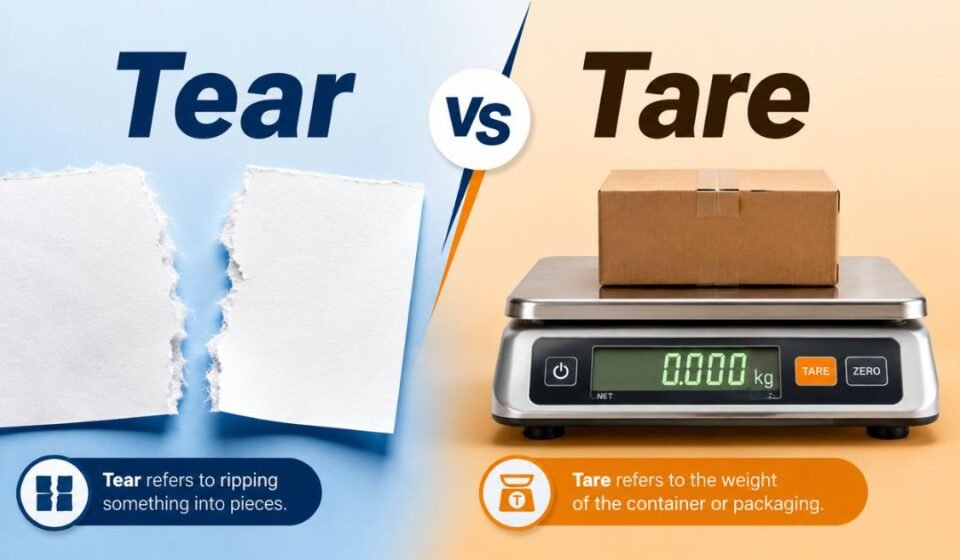
English is full of words that sound the same but mean very different things. “Tear” and “tare” are perfect examples. They sound almost identical when spoken, but their meanings, origins, and uses are worlds apart. This mix-up trips up students, writers, and even professionals who work with weights and shipping documents every day.
In this guide, we will break down the difference between tear and tare in simple terms. You will learn where each word comes from, how to use them correctly, and how to avoid the common mistakes that confuse so many people.
Why Do These Identical-Sounding Words Confuse People?
Tear and tare are what linguists call homophones. That means they sound the same but have different spellings and meanings. English has thousands of these word pairs, and they are a common source of writing errors.
The confusion gets worse because “tear” itself has two meanings. It can mean the water that falls from your eyes when you cry, or it can mean to rip something apart. Add “tare” to the mix, a word most people rarely use in daily conversation, and it is easy to see why mistakes happen.
Most people learn “tear” early in school. They read it in stories and hear it in songs. “Tare,” on the other hand, shows up mostly in shipping, science, and cooking contexts. Because it is less common, many writers simply do not know it exists, so they default to “tear” even when it is wrong.
Here is a quick snapshot of why the confusion happens:
| Reason | Explanation |
| Same pronunciation | Both words rhyme with “hair” or “care” |
| Rare exposure to “tare” | Most people only see it in technical settings |
| Double meaning of “tear” | It can mean crying or ripping |
| Spellcheck limits | Spellcheckers often miss homophone errors |
Where Did Tear and Tare Come From?
To really understand these two words, it helps to look at their history. Tear and tare did not grow from the same root. They arrived in English through completely different paths, centuries apart.
The Germanic Path: How Tear Evolved
The word “tear” has deep roots in Old English. It comes from the Germanic word “teran,” which meant to rip or pull apart. Over hundreds of years, this word kept its core meaning of tearing fabric, paper, or skin.
Interestingly, the “tear” that means a drop of water from crying comes from a different Old English word, “tēar.” This word is related to old Germanic and Latin words for weeping. So while both meanings of “tear” are spelled the same today, they actually started as separate words that merged in spelling over time.
This shared spelling is why English speakers pronounce “tear” two different ways. When it means ripping, it rhymes with “hair.” When it means crying, it rhymes with “here.” Context is the only real clue you get.
The Arabic Journey: How Tare Arrived
“Tare” took a much longer road to English. It traces back to Arabic, from the word “tarah,” which meant something that is thrown away or discarded. This word moved into Medieval Latin, then into French and Italian trade language, before finally settling into English.
Traders used the word to describe the weight of the packaging or container that had to be subtracted to find the true weight of goods. This is why “tare” is so closely tied to weighing and shipping even today. Its meaning has stayed almost the same for centuries.
Because tare came from trade and commerce, it never became a common household word. It stayed mostly in warehouses, labs, and shipping documents, which explains why so few people use it casually.
How Do You Use Tears vs Tare in Different Contexts?
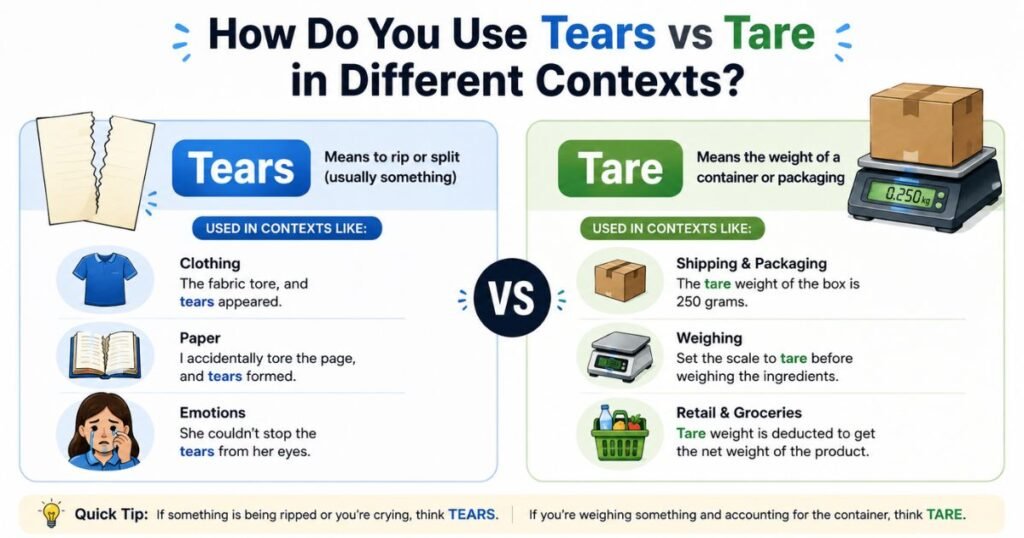
Knowing history is helpful, but the real skill is using these words correctly in daily writing. Each word fits specific situations, and mixing them up can confuse your reader or make your writing look careless.
Everyday Writing with Tear
In everyday writing, “tear” almost always shows up in two forms. As a verb, it means to rip something. As a noun, it can mean either a rip in an object or a drop of water from crying.
Some common examples include:
- She let a tear roll down her cheek during the movie.
- Please do not tear the wrapping paper too fast.
- There is a small tear in the sleeve of my jacket.
- He was close to tears after hearing the news.
Notice how context makes the meaning clear. You rarely need to guess whether “tear” means ripping or crying, because the sentence around it gives you the answer.
Technical Writing with Tare
“Tare” belongs almost entirely to technical, scientific, and business writing. It refers to the weight of an empty container, which gets subtracted from the total weight to find the actual weight of the contents.
Here are typical examples:
- The scale must be set to zero using the tare function before weighing the ingredients.
- The tare weight of the truck is 8,000 pounds.
- Chefs often tear the bowl before adding flour to get an accurate measurement.
- The shipping label listed the tare weight separately from the gross weight.
If you work in shipping, cooking, chemistry, or logistics, you will see this word often. Outside those fields, it rarely appears.
When Context Makes It Obvious
One helpful rule is to look at the setting of your sentence. If you are writing about emotions, clothing, or paper, you almost certainly need “tear.” If you are writing about scales, packages, or measurements, “tare” is the correct choice.
A simple test: ask yourself if the word relates to weight or removal of weight. If yes, use “tare.” If the word relates to ripping or crying, use “tear.” This small mental check can save you from an embarrassing mistake in a report or article.
Examples of Tear in Classic Literature

Tear has appeared in English writing for centuries, and its emotional weight makes it a favourite among poets and novelists. Its use in old texts also shows how the meaning has stayed steady over time.
Famous Uses in Old Books
Classic authors often used “tear” to show sadness or deep emotion in their characters. Poets especially liked the word because it added feeling without needing long descriptions. A single tear falling could say more than several sentences of explanation.
Novelists also used “tear” in its ripping sense to build tension. A torn letter, a torn dress, or a torn photograph often symbolised broken relationships or lost hope. This double use of the word gave writers a flexible tool for both physical and emotional storytelling.
Also Read This:Deem Fit Meaning
Modern Business and Technical Writing
While tear stayed popular in creative writing, modern business and technical writing rarely use it in the emotional sense. Instead, you will see “tear” used to describe wear and tear on equipment, torn packaging, or damaged goods in inspection reports.
This shift shows how word usage changes depending on the type of writing. Creative writers lean toward the emotional meaning, while business writers lean toward the physical meaning of ripping or damage.
What Words Mean the Same as Tear vs Tare?
Learning synonyms can help you understand a word better and avoid repeating it too often in your writing. Tears and tears each have their own set of related words, and knowing them can sharpen your vocabulary.
Words Related to Tear
Some common synonyms for tear, depending on its meaning, include:
| Meaning | Synonyms |
| To rip | Rip, shred, split, tear apart, rupture |
| A drop from crying | Teardrop, droplet |
| A rip in fabric | Rip, hole, split, gash |
Words Related to Tare
Tare has fewer common synonyms because it is a specific technical term. Still, a few related words appear in weighing and shipping contexts:
| Term | Meaning |
| Net weight | Weight of goods without packaging |
| Gross weight | Total weight including packaging |
| Tare weight | Weight of the container alone |
| Zeroing | The act of resetting a scale to remove tare |
Visualizing the Differences
It can help to picture a package on a scale. The scale first reads the tare weight, which is just the empty box. Once you add the product, the scale shows the gross weight. Subtract the tare from the gross, and you get the net weight, which is what the customer actually pays for.
American and British English
Both American and British English use “tear” and “tare” the same way in spelling and meaning. The main difference is pronunciation habits and how often each word appears. British shipping and trade documents use “tare” just as often as American ones, since the word came from international trade language rather than regional dialects.
Common Mistakes When Using Tear vs Tare
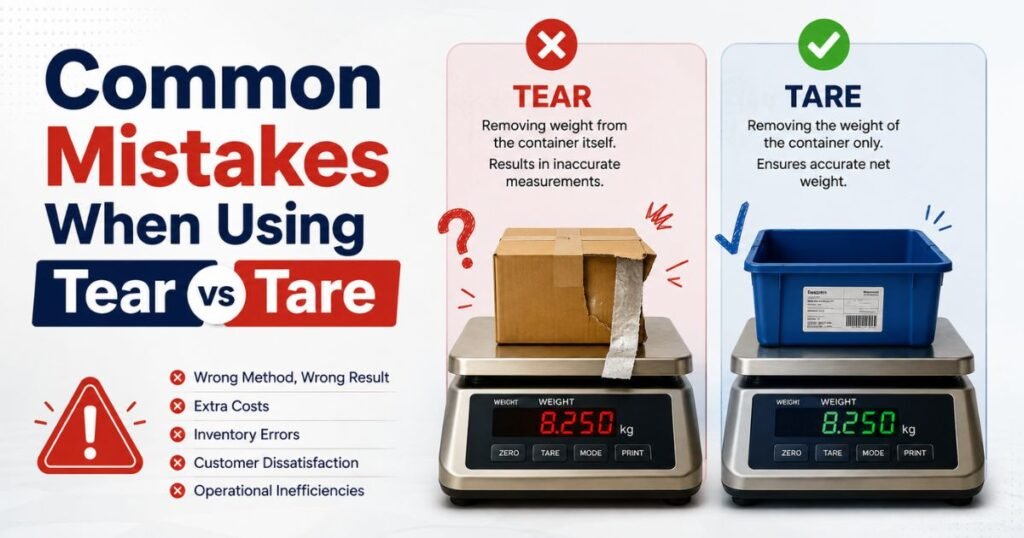
Even experienced writers slip up with these two words. Understanding the most common mistakes can help you catch them before they end up in your final draft.
- Writing “tare” instead of “tear” when describing crying or ripping.
- Using “tear” in technical documents when “tare” is the correct term for container weight.
- Assuming spellcheck will catch the error, when in fact both words are spelled correctly on their own.
- Forgetting that “tear” has two different pronunciations depending on meaning.
- Mixing up “tare weight” with “net weight” in shipping or cooking instructions.
These mistakes are easy to avoid once you know the pattern. Most errors happen simply because tare is an unfamiliar word, not because the rule is complicated.
Practical Tips for Using Tear vs Tare Correctly
A few simple habits can help you use these words correctly every time, whether you are writing a story, a recipe, or a shipping report.
Real-World Editing Experience
Professional editors often say the fastest way to catch this error is to read your sentence out loud and ask what the word is actually describing. If it involves emotion or ripping, it needs an “e” in the middle, spelled “tear.” If it involves scales or packaging weight, it needs an “a,” spelled “tare.”
Editors also recommend keeping a short list of tricky homophones nearby while writing. Over time, this habit builds muscle memory, and you stop needing the list at all.
Memory Tricks That Work
Here are a few memory tricks that make it easier to remember which word to use:
- Think of “tare” and “trade,” since both start with similar sounds and relate to weighing goods.
- Remember that “tear” rhymes with “wear,” and clothes can tear.
- Picture a scale that needs to be “zeroed,” and link that image to the letter “a” in tare.
- Use the phrase “tears fall, tare weights” to separate the two meanings quickly.
With a little practice, these tricks become second nature, and the confusion between tear and tear disappears completely.
Final Thoughts
Getting tear and tear right is a small detail, but small details add up to strong, credible writing. Once you understand that one word belongs to feelings and fabric while the other belongs to scales and shipping, the choice becomes automatic rather than confusing.
Keep the simple tricks from this guide in mind, read your sentences carefully, and you will rarely mix these words up again. Good writing is built on habits like this, and mastering small word pairs like tear and tear is a great step toward clearer, more confident writing overall.

Mubeen is a passionate writer and content creator who enjoys sharing useful, engaging, and easy-to-understand information. With a focus on well-researched and reader-friendly content, Mubeen aims to help readers discover valuable insights and reliable information.