English learners often get stuck on three small phrases: “is used,” “has been used,” and “was used.” They look similar. They even share the word “used.” But each one tells a different story about time.
“Is used” talks about something that happens now, again and again. “Has been used” talks about something that started in the past and still matters now. “Was used” talks about something that happened and finished in the past. Once you understand this difference, your writing and speaking become clearer and more natural.
This guide breaks each form down in simple words. You will see real examples, common mistakes, regional differences, idioms, and quick tips you can apply today.
Contextual Examples
Seeing these forms in real sentences helps more than reading rules alone. Below, each example is labeled so you can spot the tense and voice at a glance.
Basic Passive Forms Labeled
Each of these three forms is a passive voice. That means the focus is on the object receiving the action, not on who does the action.
| Form | Example Sentence | Tense | Meaning |
| Is used | This tool is used every day. | Present Simple Passive | A regular, repeated action |
| Has been used | This method has been used for years. | Present Perfect Passive | Started in the past, still true now |
| Was used | This machine was used last month. | Past Simple Passive | Finished action in the past |
Notice how the auxiliary verb changes the whole meaning. “Is” points to habit. “Has been” points to a link between past and present. “Was” points to something closed and done.
Active/Passive Comparisons With Labels
It helps to see the active version next to the passive one. This shows who does the action versus what happens to the object.
- Active: The team uses this app daily. (Present Simple, Active)
- Passive: This app is used daily. (Present Simple, Passive)
- Active: Workers have used this process for a decade. (Present Perfect, Active)
- Passive: This process has been used for a decade. (Present Perfect, Passive)
- Active: The staff used this room yesterday. (Past Simple, Active)
- Passive: This room was used yesterday. (Past Simple, Passive)
In each pair, the passive sentence drops the doer or moves it to the end with “by.” This keeps the object as the main subject of the sentence.
Questions and Negatives With Labels
Question and negative forms follow simple patterns once you know the base rule.
| Type | Is Used | Has Been Used | Was Used |
| Question | Is this used often? | Has this been used before? | Was this used yesterday? |
| Negative | This is not used often. | This has not been used before. | This was not used yesterday. |
The auxiliary verb (“is,” “has,” “was”) always moves to the front for questions. For negatives, “not” goes right after the auxiliary.
Time Markers and Meaning Checks
Time markers are words that hint at which tense fits best. Learning to spot them removes most of the guesswork.
- Words like “every day,” “usually,” “often,” and “always” point to “is used.”
- Words like “since,” “for years,” “recently,” and “so far” point to “has been used.”
- Words like “yesterday,” “last year,” “in 2020,” and “ago” point to “was used.”
If you see one of these markers, check that your verb form matches it. A mismatch is one of the most common grammar slips in English.
Common Mistakes
Even confident English speakers mix up these forms sometimes. Here are the five mistakes that show up most often, with fixes for each.
Mistake 1 – Wrong Auxiliary With Tense
Some learners pick the wrong helping verb for the time frame they mean. For example, saying “This method has been used since 2015” is incorrect because “since” needs present perfect, not present simple.
Fix: Say “This method has been used since 2015.” Whenever “since” or “for” appears, “has been used” is almost always the right choice.
Mistake 2 – Confusing Present Simple Passive With Present Perfect Passive
“Is used” and “has been used” can look close in meaning, but they are not the same. “Is used” describes a routine action happening in the present. “Has been used” describes an action that began earlier and connects to now.
Fix: Ask yourself if the action is a regular habit (use “is used”) or a continuing situation from the past (use “has been used”). This one question solves most confusion.
Mistake 3 – Using Was Used For Present Relevance
Another common error is using “was used” when the topic still matters today. For example, “This software was used by many companies” sounds like the software is no longer in use, even if that is not what the speaker meant.
Fix: If the action still applies now, choose “has been used” instead of “was used.” Save “was used” for actions that are fully finished with no current link.
Mistake 4 – Subject-Verb Agreement Errors With Is/Has/Was
Agreement mistakes happen when the subject is plural but the verb stays singular, or the other way around. For example, “The tools is used daily” is wrong because “tools” is plural.
Fix: Match your auxiliary to the subject:
| Subject | Correct Form |
| Singular subject | is used / has been used / was used |
| Plural subject | are used / have been used / were used |
Always check the subject first, then pick the matching verb form.
Mistake 5 – Omitted Agent or Time Marker That Changes Meaning
Sometimes leaving out key details changes what a sentence actually means. “This chemical was used” without any time marker leaves the reader guessing when and for how long.
Fix: Add a clear time marker or agent when it matters for understanding. For example, “This chemical was used in the 1990s” gives the reader a full picture.
American vs British English Differences
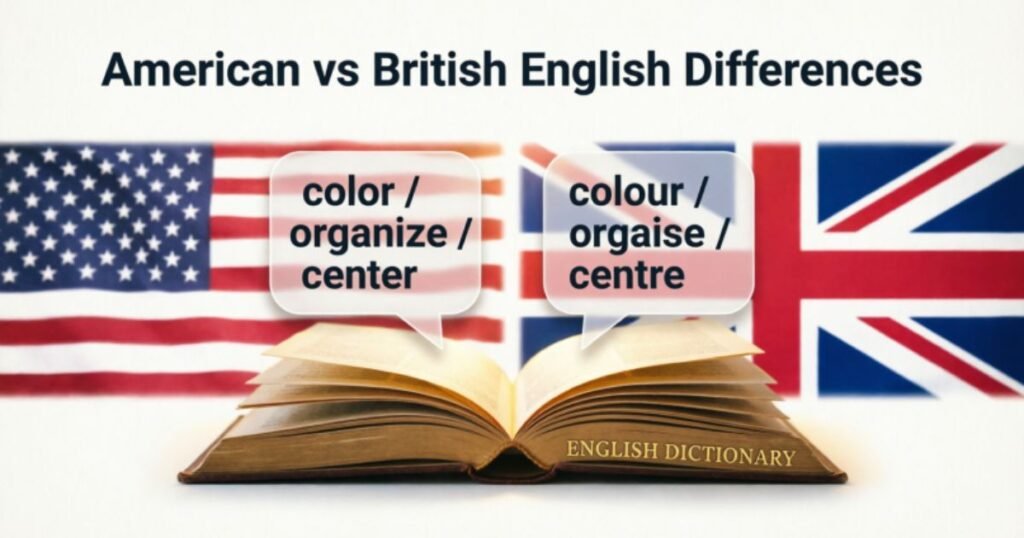
Many learners assume American and British English handle passive tenses very differently. In truth, the grammar core stays the same, but small style habits differ.
Core Grammar Is the Same
Both American and British English use the same rules for “is used,” “has been used,” and “was used.” The auxiliary verbs and time logic do not change across regions. If you learn one version correctly, you can use it in both.
This means learners do not need separate grammar systems for each region. The real differences show up in style choices, not grammar rules.
Subtle Preference in Style Guides
British writing style tends to lean slightly more on present perfect (“has been used”) in everyday speech and writing. American style often prefers past simple (“was used”) when British speakers might still choose present perfect.
Also Read This: That’s or Thats
For example, a British speaker might say, “I have already used it,” while an American speaker might say, “I already used it.” Both are grammatically correct in their own style traditions.
Use in Reporting and Journalism
News writing in both regions favors clear, direct passive forms. Journalists often choose “was used” for finished events and “has been used” when a story links directly to current events.
Here is a quick comparison:
| Context | Preferred Form | Reason |
| Breaking news update | Was used | Event has ended |
| Ongoing investigation | Has been used | Story is still developing |
| General policy explainer | Is used | Describes standard practice |
Pronunciation and Pacing
Spoken English adds another layer. In fast, casual speech, “has been” often gets shortened to sound like “‘s been,” especially in British and American conversation alike.
Pacing also matters for clarity. Slowing down slightly on the auxiliary verb (“is,” “has,” “was”) helps listeners catch the tense, especially in phone calls or presentations where tone carries meaning.
Idiomatic Expressions
Beyond grammar rules, these passive forms also appear in common idioms and expressions. Recognizing them helps you sound more natural.
Common Passive Idioms With Labels
Here are a few expressions built around these forms, along with their everyday meaning.
- “Is used to” (idiom, meaning familiar with something): She is used to working late nights.
- “Has been used up” (idiom, meaning fully consumed): The paint has been used up already.
- “Was used against someone” (idiom, meaning turned into evidence or a weapon): His words were used against him later.
Note that “is used to” is different from “is used” in a passive sense. “Used to” here works like an adjective phrase meaning “accustomed to,” not an action being performed.
Verbs Often Found With These Passives
Certain verbs pair naturally with these passive structures in everyday English. Knowing these common pairs speeds up your fluency.
| Verb | Example With Passive Form |
| Make | This bag is made and used for travel. |
| Design | This app was designed and used by students. |
| Test | This method has been tested and used widely. |
| Approve | This drug has been approved and used since 2010. |
These combinations show up often in academic writing, technical manuals, and news articles.
Practical Tips
These ten tips give you a quick mental checklist. Use them whenever you are unsure which form fits your sentence.
Tip 1 – Ask What You Mean: Present Habit, Recent Use, Or Past Event?
Before picking a verb form, ask what kind of action you are describing. A habit needs “is used.” A recent or ongoing link needs “has been used.” A closed past event needs “was used.”
Tip 2 – Check For Time Markers That Force A Tense
Look for words like “since,” “for,” “yesterday,” or “always” in your sentence. These words often tell you exactly which tense is correct.
Tip 3 – Label The Parts Of Speech To Avoid Mistakes
Mentally mark the subject, auxiliary, and main verb in your sentence. This small habit catches agreement errors before you speak or type them.
Tip 4 – Watch For Idioms With “Used To”
Remember that “used to” for past habits (“I used to smoke”) is different from the passive “was used.” Don’t mix these two structures by mistake.
Tip 5 – Choose Active Voice When Clearer
Passive voice is useful, but it is not always the best choice. If the doer of the action matters, switch to active voice for a stronger, clearer sentence.
Tip 6 – Use Present Perfect Passive To Emphasize Present Result
When you want to show that a past action still affects the present, choose “has been used.” This form links past effort with today’s outcome.
Tip 7 – Avoid Redundant Agents With Passive Auxiliaries
Do not repeat information the reader already knows. If the doer is obvious or unimportant, skip the “by” phrase entirely.
Tip 8 – Check Agreement Carefully With Collective Nouns
Words like “team,” “staff,” or “group” can be tricky. In most everyday English, treat them as singular (“The team is used to this schedule”) unless members are acting separately.
Tip 9 – Read Aloud To Hear Tense and Aspect Fit
Reading your sentence out loud often reveals awkward tense choices your eyes might miss. If it sounds wrong when spoken, it probably needs a fix.
Tip 10 – Edit For Economy And Clarity
Cut extra words that do not add meaning. Short, clear sentences with the right passive form communicate better than long, cluttered ones.
Revision Examples and Fixes
Seeing wrong sentences corrected side by side makes these rules stick. Here are three common problem types with clear fixes.
Example: Wrong Time Marker With Present Perfect
Wrong: This tool has been used yesterday. Fixed: This tool was used yesterday.
“Yesterday” is a finished time marker, so it needs past simple passive, not present perfect passive.
Example: Subject-Verb Agreement
Wrong: These reports was used in the meeting. Fixed: These reports were used in the meeting.
“Reports” is plural, so the verb must also be plural: “were,” not “was.”
Example: Active Voice Replacement
Wrong (unclear passive): Mistakes were made and it was used incorrectly. Fixed (active, clearer): The team made mistakes and used it incorrectly.
Switching to active voice here makes the sentence direct and easy to follow, especially when the doer matters to the reader.
Conclusion
“Is used,” “has been used,” and “was used” each carry their own timing and purpose. Once you connect each form to its correct time marker and context, choosing the right one becomes almost automatic. Practice with real sentences, check subject-verb agreement, and read your work aloud to catch small errors before they become habits.
Grammar mastery comes from steady practice, not memorisation alone. Keep these tables and tips nearby, apply them in your daily writing, and your sentences will sound clearer, more natural, and more confident every time.

Mubeen is a passionate writer and content creator who enjoys sharing useful, engaging, and easy-to-understand information. With a focus on well-researched and reader-friendly content, Mubeen aims to help readers discover valuable insights and reliable information.